

AI in Education: Smarter Learning or Too Much Dependence?
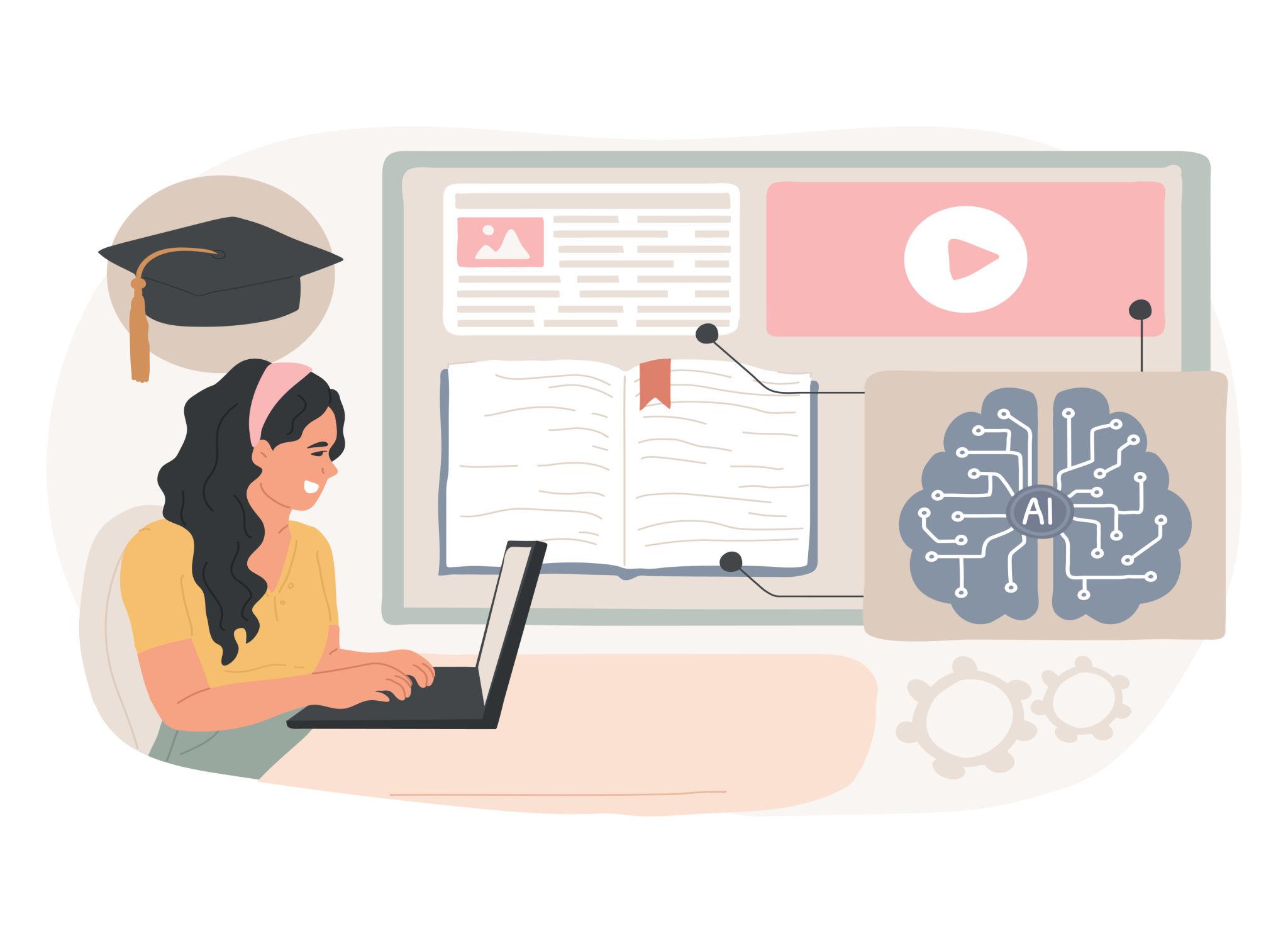
Artificial intelligence is rapidly changing education. Students can receive instant explanations, teachers can create learning materials more efficiently, and schools can use data to identify where additional support may be needed. From AI tutors and automated feedback to personalized learning platforms, technology is becoming part of everyday education.
However, its growing presence raises an important question: Is AI helping students learn more effectively, or is it making them overly dependent on technology?
A More Personalized Learning Experience
One of AI’s greatest advantages is its ability to adapt learning materials to individual students. In a traditional classroom, teachers may find it difficult to provide every learner with continuous, personalized support. AI-powered tools can analyze a student’s progress, identify areas of difficulty and suggest exercises suited to their level.
A student struggling with mathematics, for example, can receive additional explanations and practice questions. Another student who understands the topic quickly can move on to more challenging material.
This does not replace the teacher. Instead, it can give educators more information about their students’ needs and help them provide support more effectively.
Instant Support Beyond the Classroom
AI tools allow students to ask questions and receive assistance at almost any time. They can simplify complex ideas, summarize information, translate material and provide examples that make difficult subjects easier to understand.
This can be especially valuable for students who need additional support outside school hours. AI may also make learning more accessible by offering text-to-speech functions, captions, language assistance and other tools for learners with different needs.
Nevertheless, an immediate answer is not always the same as genuine understanding. Students still need to examine explanations, ask further questions and apply what they have learned independently.
How AI Can Support Teachers
AI is not useful only for students. Teachers can use it to prepare lesson plans, generate exercises, organize educational content and create initial versions of assessments. It can also help with repetitive administrative tasks, giving teachers more time to focus on instruction and communication with students.
However, AI-generated materials must always be reviewed. A system may produce inaccurate information, unsuitable questions or content that does not match the students’ age and learning objectives. Teachers remain responsible for deciding what is appropriate and educationally valuable.
The Risk of Excessive Dependence
The convenience of AI can become a problem when students begin using it to complete every task. If a tool writes an essay, solves a problem or provides an answer without requiring the student to think, the assignment may be completed—but little learning has taken place.
Overdependence could weaken important abilities such as critical thinking, research, creativity and problem-solving. Students may also become less confident in their own judgment if they constantly seek confirmation from an automated system.
Education is not simply about producing the correct answer. It is also about understanding the process, learning from mistakes and developing the ability to work independently.
AI Can Also Be Wrong
AI-generated responses often sound confident, even when they contain errors. A system may provide incorrect facts, invent sources or present outdated information as if it were reliable.
Students therefore need strong digital literacy skills. They should learn to compare information across credible sources, check original documents and recognize when an answer requires further verification.
Schools must teach students not only how to use AI, but also how to question it.
Academic Integrity in the Age of AI
AI has also complicated the meaning of original work. If students submit generated content without understanding or acknowledging it, teachers cannot accurately evaluate their knowledge.
Simply banning AI may not provide a lasting solution. These tools are likely to remain part of education and the workplace. A more practical approach is to establish clear rules explaining when AI is allowed, how it may be used and when its use should be disclosed.
Assignments may also need to change. Teachers can place greater emphasis on classroom discussions, practical projects, personal reflection and explanations of how students reached their conclusions. These methods evaluate understanding more effectively than a final answer alone.
Finding the Right Balance
Artificial intelligence can make education more accessible, personalized, and efficient. It can support students who need additional explanations and help teachers manage some of their workload. Yet it cannot replace curiosity, effort, discussion, or the relationship between a teacher and a student.
The goal should not be to remove AI from education or allow it to complete every task. The goal should be to use it with clear boundaries and a strong educational purpose.
AI can make learning smarter—but only when students remain active as participants. Technology should support the learning process, not take control of it. The most valuable skill in the AI era may therefore be knowing when to use the technology, when to question it and when to think independently.